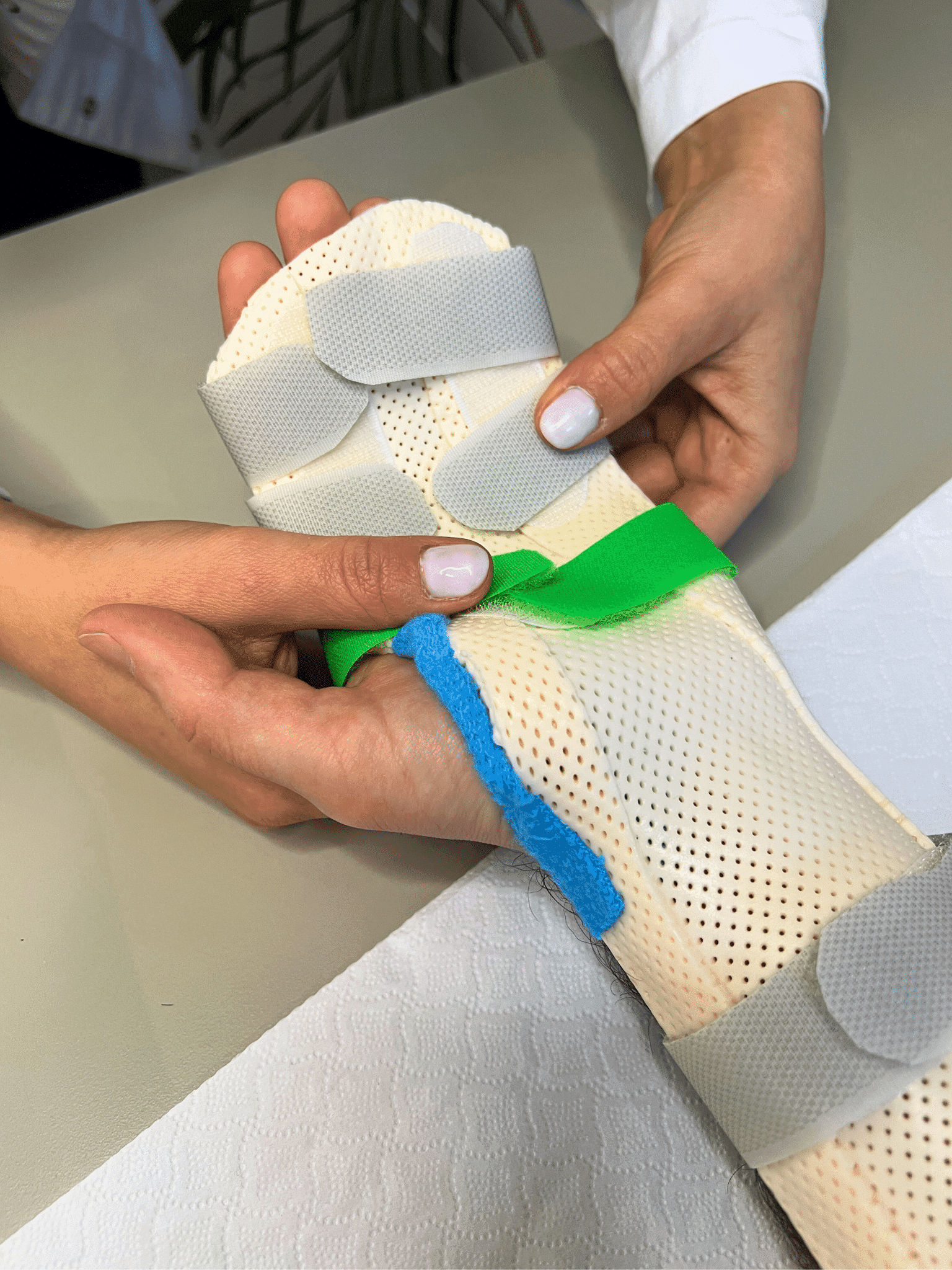
Specialist wrist and hand physiotherapy is indicated for wrist fractures, tendon and ligament injuries, carpal tunnel syndrome, trigger finger, thumb-base osteoarthritis, De Quervain’s syndrome, Dupuytren’s disease, compressive neuropathies and post-traumatic or post-surgical outcomes. Treatment is based on a thorough functional assessment, manual therapy, progressive therapeutic exercise, physical therapy and custom-made splinting, with the aim of restoring the hand’s mobility, strength and function.
To continually improve my clinical practice, I carry out research at the Sapienza University of Rome, where I review the most recent scientific evidence and study new approaches to improve hand physiotherapy. The research also addresses painful conditions, to find the best conservative solutions — that is, without resorting to surgery when it is not necessary. This work is closely aligned with innovative surgical procedures: hand surgery and hand physiotherapy are two worlds that must move forward together.
Within rehabilitation as a whole, hand surgery and hand physiotherapy are evolving together and steadily, increasingly distinguishing themselves as a specialised, solid branch — precisely because of the anatomical and functional complexity of this region.
I am a member of AIRM, the Italian Association for Hand Rehabilitation, which brings together professionals experienced in hand and upper-limb rehabilitation and promotes continuous training, research and dialogue with hand surgeons. I am also part of the Manual Therapy Group (GTM), which promotes advanced research on rehabilitation, clinical reasoning, manual therapy and the scientific basis of therapeutic exercise.
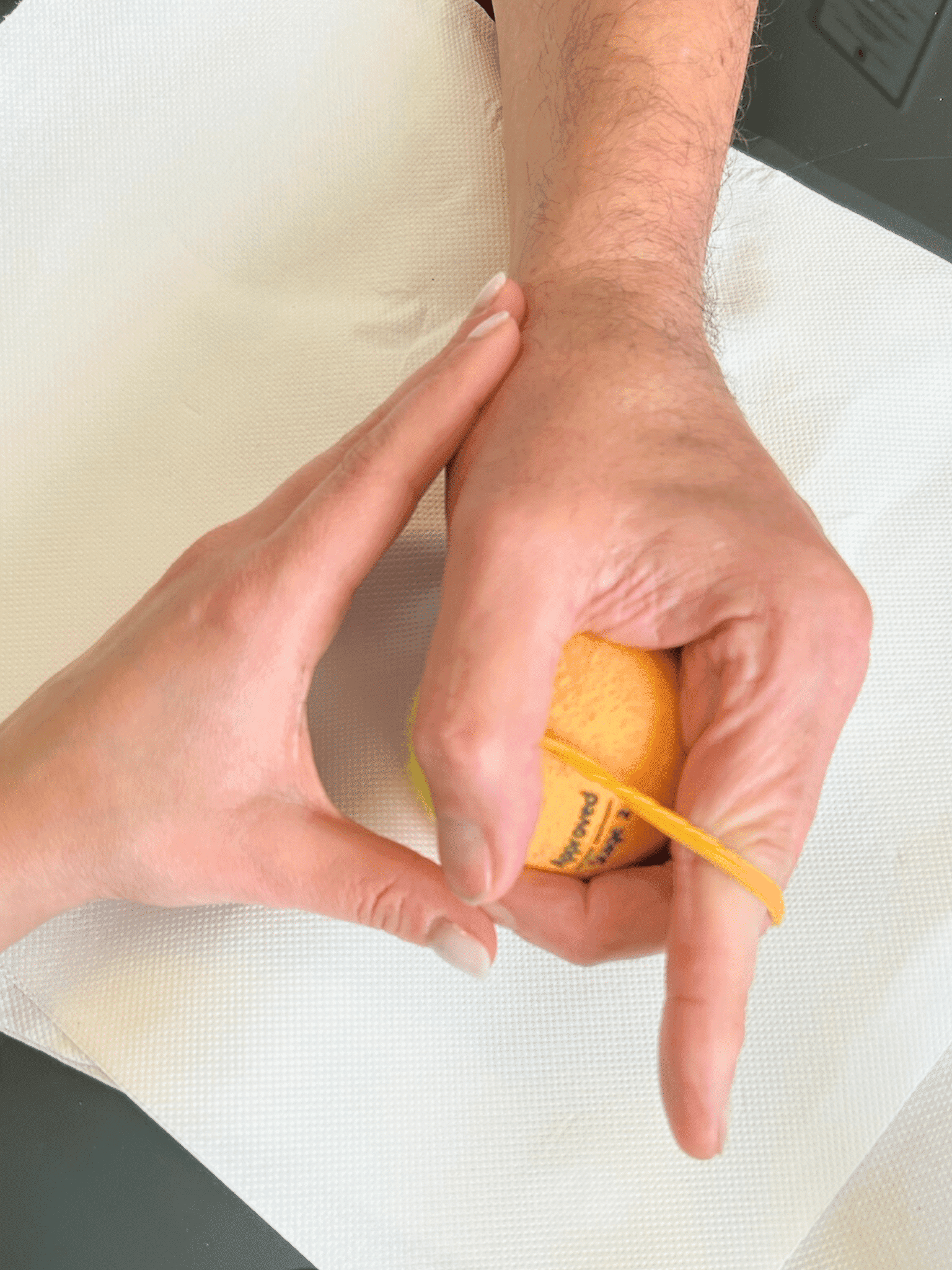
Wrist and hand physiotherapy requires in-depth skills and a precise knowledge of anatomical complexity: every finger and every part of the hand has an articulated structure and different tendon and ligament systems, so an injury in one specific area cannot be treated like another. Care is always personalised, adapted to the injury, the region involved, the functional demands and the person. This approach is typical of those who have followed highly specialised training, such as master’s programmes and advanced courses dedicated to wrist and hand rehabilitation.
Conditions treated
Fractures
- Fractures of the wrist and all the carpal bones
- Metacarpal fractures
- Rolando fracture
- Colles or Smith fracture
- Phalanx fractures
Injuries & syndromes
- Stener lesion
- Wrist and finger ligament injuries, especially scapholunate
- Wrist and finger tendon injuries
- Trigger finger or stenosing tenosynovitis
- Carpal tunnel syndrome
- De Quervain’s syndrome
Degenerative & complex
- Thumb-base osteoarthritis (rhizarthrosis)
- Dupuytren’s disease
- Kienböck’s disease
- Sudeck’s atrophy or complex regional pain syndrome
- Surgical and burn scars, post-trauma adhesions
- Complex trauma with injury to tendons, vessels and nerves
- Compressive neuropathies of the median, radial or ulnar nerve
The functional assessment makes it possible to frame the problem correctly, define the treatment goals and set up a personalised rehabilitation path. Depending on the clinical picture, the work may include recovery of mobility, pain control, tissue protection, scar management, progressive therapeutic exercise and the use of custom-made splints.
In the studio
Other services

First specialist physiotherapy visit
Direct access, a thorough history and a functional diagnosis to build a tailored path.
Learn more
Specialist shoulder & elbow physiotherapy
Shoulder and elbow: the pivots that bring hand and wrist where you want to act. A dynamic, up-to-date approach.
Learn more
Specialist cervical physiotherapy
Neck pain, dizziness, cervicogenic headache, whiplash: a path dedicated to the cervical spine.
Learn more