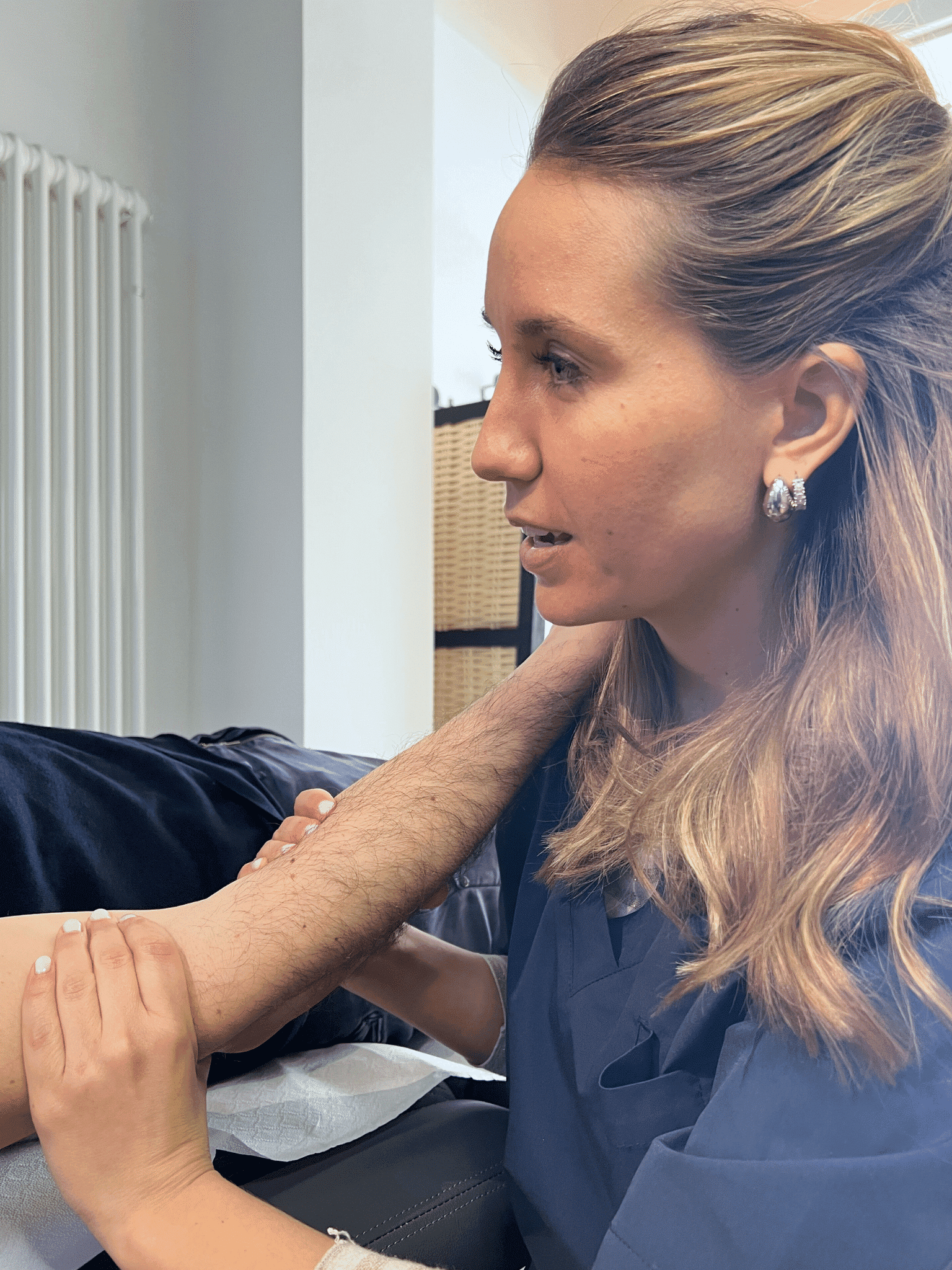
Shoulder and elbow are load-bearing, releasing pivots, indispensable for bringing the wrist and hand exactly where the person wants to act, know and feel. The elbow, in particular, plays a key role in positioning the hand in space, allowing it to move closer to or further from the body and to rotate. This function relies on a complex anatomy of joint, tendon, muscle, nerve and vascular components, whose interaction can make managing disorders of this area more complex.
Today, shoulder disorders are one of the leading reasons for accessing healthcare services worldwide. For this reason, the clinician who takes on these patients must be able to recognise, assess and correctly interpret signs and symptoms, using an approach based on the best available scientific evidence. Managing a patient with shoulder pain requires advanced skills in screening, clinical assessment, therapeutic reasoning and outcome measurement.
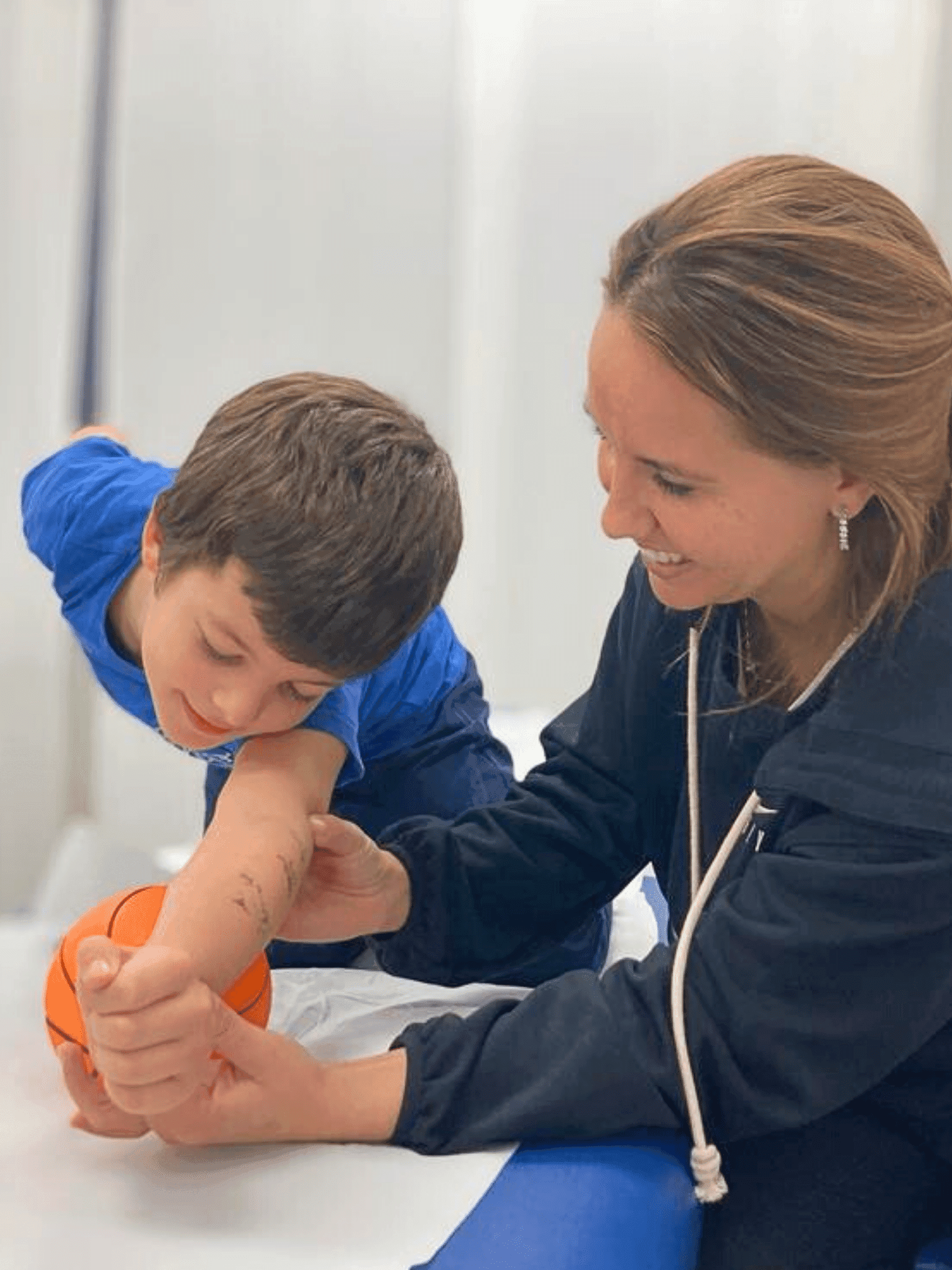
Conditions treated
Shoulder
- Rotator cuff
- Non-specific painful shoulder
- Post-surgical shoulder (SLAP lesions, cuff repair, outcomes of humerus, clavicle and scapula fractures)
- Anatomical and reverse shoulder replacement
- Shoulder dislocations and instability of varying degrees
- Frozen shoulder or adhesive capsulitis
- Tendinopathies
Elbow
- Lateral Elbow Disorders
- Lateral epicondylalgia
- Medial epicondylitis
- Bursitis
- Post-surgical elbow
- Bicipital aponeurosis syndrome
- Compartment syndrome
Syndromes & compressions
- Thoracic outlet syndrome
- Double Crush Syndrome
- Neuropathic compressions of shoulder, elbow, wrist and hand
Assessment and treatment
A thorough initial assessment makes it possible to frame the clinical picture correctly, distinguish cases that can be managed with physiotherapy from those requiring the involvement of other healthcare professionals, and build a personalised rehabilitation programme based on the patient’s needs.
Treatment may include:
- manual therapy
- symptom-modulation techniques
- progressive therapeutic exercise
- recovery of mobility
- recovery of strength and motor control
- load education and a gradual return to activity
Particular attention is given to advanced clinical reasoning, communication with other professionals and shared care when needed. Through clinical cases, functional assessment and outcome-measurement tools, the rehabilitation path is built to be effective, safe and oriented to the patient’s goals.
After a careful functional assessment, I will guide you to the most effective rehabilitation path or refer you to the most suitable professional for your case.
In the studio
Other services

First specialist physiotherapy visit
Direct access, a thorough history and a functional diagnosis to build a tailored path.
Learn more
Specialist wrist & hand physiotherapy
Manual therapy, custom splints and specific exercises, in dialogue with the wrist and hand specialist.
Learn more
Specialist cervical physiotherapy
Neck pain, dizziness, cervicogenic headache, whiplash: a path dedicated to the cervical spine.
Learn more